Why Every Marketing Team Needs a Centralized Dashboard
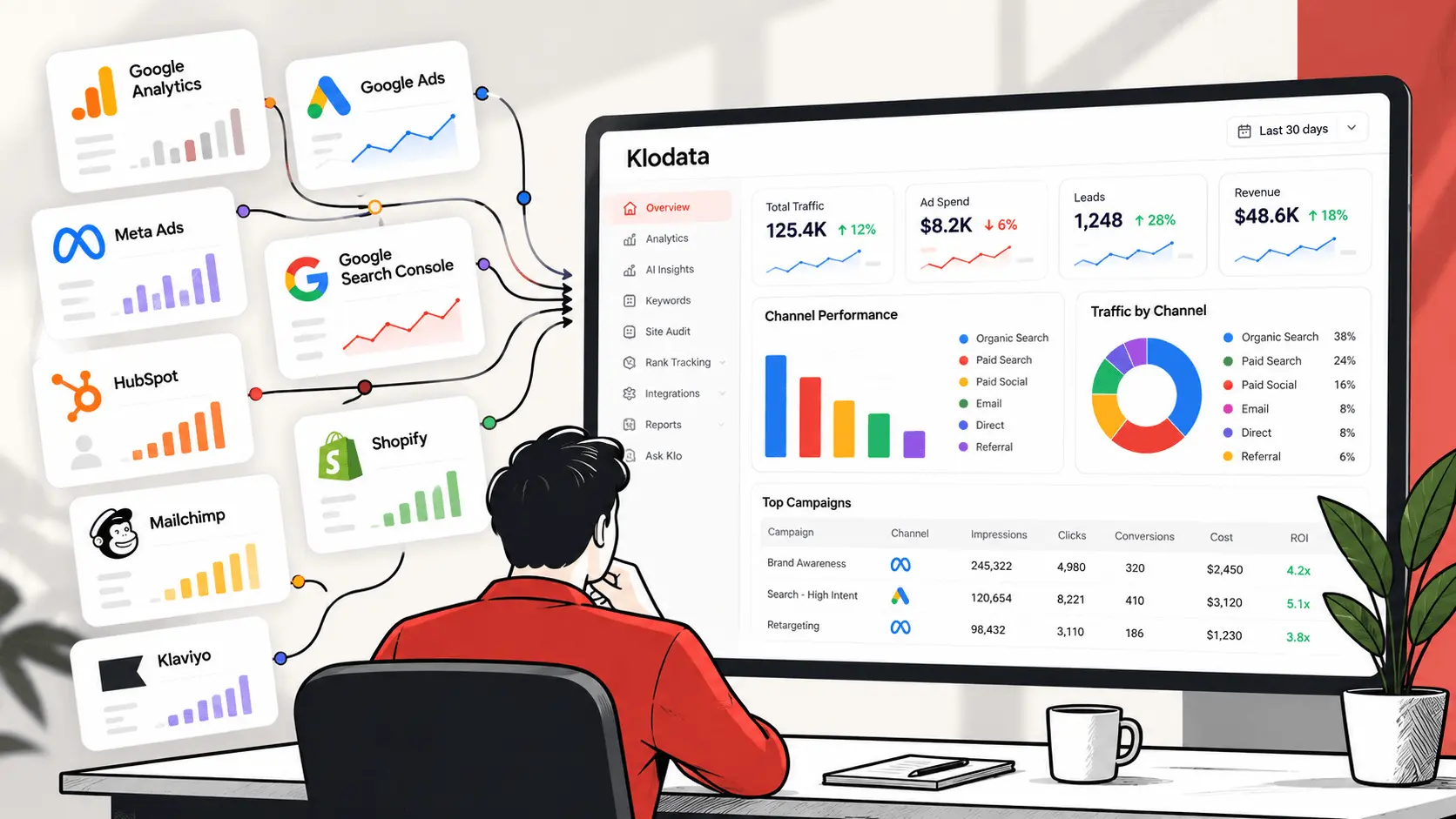
Marketing teams have access to more data than ever before. Google Analytics shows website performance. Google Ads and Meta Ads report campaign results. Google Search Console tracks organic search visibility. CRM platforms contain leads, opportunities, and customer information.
Each platform provides valuable insights. But there is one problem: your marketing data lives in too many different places.
To understand overall performance, marketers often switch between tools, export spreadsheets, combine reports manually, and spend hours preparing updates for stakeholders.
What if you could see all your marketing data in one place?
That is where a centralized marketing dashboard comes in.
In this guide, we will explore what a centralized marketing dashboard is, why marketing teams need one, and how bringing your data together can make reporting simpler and marketing decisions smarter.
What Is a Centralized Marketing Dashboard?
A centralized marketing dashboard brings marketing data from multiple platforms into one place, giving your team a consolidated view of performance.
Instead of opening several tools to understand your results, you can use a single dashboard to monitor important metrics, compare channels, and identify trends.
Depending on your marketing setup, a dashboard might bring together data from:
- Website analytics: Google Analytics 4 (GA4), website traffic, engagement, and conversions.
- Paid advertising: Google Ads, Meta Ads, and other advertising platforms.
- SEO: Google Search Console, organic clicks, impressions, rankings, and website visibility.
- CRM and lead generation: Leads, sales opportunities, conversion rates, and customer acquisition.
- Email marketing: Campaign performance, clicks, engagement, and conversions.
The goal is simple: bring the numbers that matter together so your team can understand what is happening without checking every platform separately.
A centralized dashboard does not necessarily replace your existing marketing tools. Instead, it helps you see the bigger picture across them.
6 Reasons Why Marketing Teams Need a Centralized Dashboard
1. All Your Marketing Data in One Place
Imagine starting your Monday morning by opening five different platforms just to understand how your marketing performed last week.
You check website traffic in GA4, paid campaign results in Google Ads, organic performance in Search Console, and lead volume in your CRM. Then you try to connect the numbers to understand what actually happened.
This process takes time and makes it harder to see the complete picture.
A centralized marketing dashboard brings relevant metrics together in one view. Your team can review website traffic, advertising spend, leads, and conversions without constantly switching between tools.
The benefit: Less time searching for data and more time understanding it.
2. Spend Less Time on Manual Reporting
Marketing reporting can quickly become a repetitive task.
Download data. Open spreadsheets. Copy numbers. Create charts. Check formulas. Format slides. Send the report.
And just when you finish, it is time to prepare the next one.
A well-designed marketing reporting dashboard can automate much of this routine by connecting data sources and refreshing reports according to the available integrations and refresh schedules.
Instead of rebuilding reports every week, marketers can focus on interpreting results and recommending actions.
For marketing managers, this also makes it easier to share consistent reports with leadership, sales teams, and other stakeholders.
The benefit: Less manual work and more time for analysis, strategy, and optimization.
3. Understand How Different Marketing Channels Work Together
Marketing channels rarely operate independently.
Someone might discover your business through an organic Google search, return after seeing a paid advertisement, and eventually submit a lead form.
If you evaluate each platform separately, you may understand individual channel performance but miss important connections across the customer journey.
A centralized dashboard helps you compare channel-level metrics alongside website activity and business outcomes.
For example, you could review:
- Organic search traffic alongside paid search traffic.
- Advertising spend alongside leads generated.
- Landing page visits alongside conversion rates.
- Marketing leads alongside CRM opportunities, when the relevant data is connected.
This makes it easier to ask better questions.
Is paid traffic generating leads at an acceptable cost? Is organic search contributing to qualified enquiries? Are campaigns attracting visitors who actually convert?
A dashboard will not automatically solve attribution challenges, but it can give your team a more complete view of the available evidence.
The benefit: Better visibility into how your marketing channels contribute to business goals.
4. Make Faster, Data-Driven Decisions
Marketing performance changes constantly.
An advertising campaign may become more expensive. Organic traffic may decline. A landing page may stop converting as expected. A particular channel may begin generating more qualified leads.
When the relevant metrics are scattered across platforms, spotting these changes can take longer.
A centralized dashboard makes important performance indicators easier to monitor. With clear visualizations, historical comparisons, and relevant KPIs, your team can identify changes and investigate them sooner.
For example, if advertising spend remains steady but lead volume falls, you can investigate campaign performance, landing page conversion rates, and lead quality.
The dashboard helps you identify where to look. Your team still needs to investigate the underlying cause before deciding what to change.
The benefit: Faster visibility into performance changes and more informed decisions.
5. Give Everyone a Shared View of Marketing Performance
Marketing teams often include SEO specialists, paid media managers, content marketers, analysts, and marketing leaders.
Each person may use different tools and report on different metrics. This can make it difficult for the wider team to agree on what success looks like.
A shared dashboard creates a common reporting view, with agreed definitions for important metrics such as leads, conversions, cost per lead, and marketing spend.
For example, a marketing manager can review overall performance while an SEO specialist examines organic search trends and a paid media manager focuses on campaign efficiency.
Everyone can work from the same reporting environment while retaining access to the detailed tools they need.
The benefit: Better collaboration, more consistent reporting, and fewer discussions about which report to trust.
6. Connect Marketing Activity to Business Outcomes
Clicks, impressions, sessions, and engagement are useful metrics. But they do not tell the whole story.
Businesses also need to understand how marketing activity relates to leads, sales opportunities, customers, and revenue.
A centralized marketing dashboard can help connect these different stages when the relevant data sources are integrated and the metrics are defined consistently.
For example, your team could compare advertising spend with leads generated, review conversion rates by channel, and examine how many leads progress into sales opportunities.
This helps shift conversations from “How much traffic did we generate?” to “What results did our marketing generate?”
The distinction matters. A campaign that attracts thousands of visitors may not be as valuable as one that attracts fewer but more qualified prospects.
The benefit: A clearer connection between marketing activity and business performance.
What Should a Marketing Dashboard Include?
A useful marketing dashboard should focus on the metrics your team needs to make decisions, rather than displaying every available number.
Here are some examples of what you might include.
| Marketing area | Metrics to track |
|---|---|
| Website analytics | Sessions, users, engagement, conversions |
| SEO | Organic clicks, impressions, CTR, average position |
| Paid advertising | Spend, clicks, CPC, conversions, cost per conversion |
| Lead generation | Leads, conversion rate, cost per lead |
| CRM and sales | Qualified leads, opportunities, revenue, where available |
| Overall performance | Channel comparisons, trends, and progress toward targets |
Your exact dashboard will depend on your business model, marketing channels, and reporting goals.
A B2B company may prioritize qualified leads and pipeline contribution. An ecommerce business may focus on revenue, return on ad spend, and purchase conversion rates.
The key is to choose metrics that help answer real business questions.
How to Choose the Right Centralized Marketing Dashboard
Not every dashboard solves the same problem. Before choosing one, consider these five factors.
1. Data Integrations
Check whether the dashboard supports the marketing platforms you already use. Consider both the availability of integrations and the metrics they can retrieve.
2. Ease of Use
Your dashboard should make information easier to understand, not create another complicated tool your team needs to learn.
3. Automated Reporting
Look for suitable data refresh options and ways to reduce repetitive manual reporting.
4. Flexible Reporting
Different teams need different views. Your dashboard should help you focus on relevant KPIs without overwhelming users with unnecessary information.
5. Actionable Insights
Charts are useful, but understanding what changed and what deserves attention is even more valuable. Look for features that help you investigate trends and turn observations into practical next steps.
Ultimately, the best marketing dashboard is one your team can trust, understand, and use consistently.
Meet Klodata: Your Marketing Data in One Workspace
Your marketing data should help you make decisions, not keep you busy preparing reports.
Klodata brings SEO and marketing analytics into one workspace, helping marketing teams move toward a more connected view of their performance.
Instead of treating every marketing platform as a separate reporting destination, the goal is to make it easier to bring the relevant data together and understand what it means for your marketing activities.
Whether you are reviewing organic search performance, evaluating campaigns, or preparing a marketing report, a centralized workspace can make the process more manageable.
As your marketing grows, having a consistent way to view and interpret your data becomes even more important.
Ready to simplify how you work with marketing data?